
Local SEO for AI Agencies in Mumbai: Dominate Google Maps
Introduction: The Local Search Revolution That's Changing How Mumbai Finds AI Agencies

Here's something that probably won't surprise you, but might change how you think about your agency's growth strategy: nearly half of all Google searches now have local intent. That means when someone types "AI agency near me" or "best chatbot developer in Andheri," Google isn't just returning generic results. It's pulling up a map, showing three businesses, and essentially saying, "Here are the three best options near you right now." If your AI agency in Mumbai isn't one of those three? Well, the probability of getting that click drops by roughly 70%. The consequence is stark — you're invisible to the people actively looking for exactly what you sell. And for a local seo services in mumbai provider, invisibility isn't a vanity metric — it's a revenue killer.
I currently think most AI agencies in Mumbai are making a fundamental strategic error. They're pouring money into Facebook ads, LinkedIn outreach, cold emails, and fancy website redesigns while completely ignoring the one channel where buyer intent is highest: local search — specifically, google maps seo services in mumbai that put them in front of ready-to-buy clients. Think about it from first principles. When a business owner in Goregaon realizes they need an AI chatbot for their customer service, what do they do? They don't scroll through Instagram. They open Google, type something like "AI chatbot development Mumbai," and look at the first three results. That's the moment of highest intent — and if you're not showing up, you're leaving revenue on the table.
Now let's assume you're skeptical. Maybe you think local SEO is just for restaurants, salons, and plumbers. That's an assumption worth examining. The thing is, local SEO has evolved dramatically in the past few years. Google's algorithm has gotten remarkably good at understanding local business categories, service areas, and industry-specific queries. Whether you build AI solutions, develop machine learning models, or offer data analytics consulting — if you serve clients in specific locations, local SEO matters. Whether you're a local seo company specializing in Google Maps optimization or a full-service AI agency, the framework for ranking locally is the same regardless of industry: optimize your Google Business Profile, build local citations, generate reviews, create location-specific content, and signal relevance to Google's local algorithm.
This guide is going to be comprehensive — and I mean genuinely comprehensive, not the "10 tips for local SEO" fluff you've probably read before. We're going to dig into the philosophy of how Google's local algorithm actually works, the specific mechanics of Google Business Profile optimization, a keyword strategy framework designed for AI agencies in Mumbai, and a hyperlocal approach that targets individual suburbs like Andheri, Powai, and BKC. We'll cover review strategy, content creation, technical SEO, and real-world case studies with actual metrics. This isn't just another local seo for agencies article — it's a complete playbook built on first principles thinking and proven execution frameworks. Imagine if you could double your qualified inbound leads in 90 days just by optimizing what you already have. That's not hypothetical — it's exactly what a solid local SEO strategy can do for a local SEO agency in Mumbai or any service-based business.
The trade-off here is time versus money. Local SEO requires consistent execution over months, not a one-time ad spend. But the consequence of that investment is compounding visibility — every review, every optimized page, every local citation builds on the last. Paid ads stop the moment you stop paying. Local SEO keeps working. So if you're an AI agency in Mumbai looking for a sustainable, high-ROI growth channel, buckle up. This is going to be worth your time.
Why Local SEO Matters for AI Agencies in Mumbai
Let's start with the evidence. According to Google's own data, 46% of all searches have local intent. Among mobile searches, that number climbs even higher. And here's the part that should make every AI agency owner sit up and pay attention: 76% of people who search for something nearby on their phone visit a related business within 24 hours. Now, obviously not every AI agency client walks through your door — many projects are remote. But the local intent signal matters because it tells you something crucial about how clients find and evaluate service providers.
When a CFO at a Mumbai-based manufacturing company searches "AI automation agency near me," they're not doing casual research. They have a specific need, they're ready to engage, and they want to work with someone nearby. The proximity signal isn't just about physical distance — it's about trust. People inherently trust local businesses more. There's a psychological assumption at play: if someone is in my city, they understand my market, my language, my business culture. That trust factor is enormous when you're selling AI services that require deep integration with a client's operations.

Let me paint a hypothetical scenario. You run an AI agency in Andheri West. A real estate developer in nearby Goregaon needs an AI-powered property valuation tool. They search "AI agency Goregaon" or "machine learning company near me." If your Google Business Profile is optimized, you have reviews from local clients, and your website mentions serving the Goregaon area, Google's local algorithm will likely surface your business. Without local SEO optimization, a competitor in BKC who has invested in these signals will capture that lead instead. The logic is simple but the execution is where most agencies fail.
Here's a perspective that might shift your worldview on this: local SEO isn't just about ranking — it's about building a moat. Every review you collect, every local directory you're listed in, every piece of location-specific content you publish creates a barrier that's incredibly hard for competitors to replicate quickly. You can outspend someone on Google Ads overnight. You can't fake 50 five-star reviews from verified local clients. You can't shortcut a year's worth of consistent local citation building. The merit of local SEO is that it rewards genuine, sustained effort — which means the agencies that commit to it early build advantages that compound over time.
The AI agency market in Mumbai is growing fast. New agencies are popping up in every suburb — Andheri, Lower Parel, BKC, Powai, Thane. The competition for high-value clients is intensifying. But here's the paradox: while the supply of AI agencies is increasing, the demand is growing even faster. Every business in Mumbai — from textile manufacturers in Dadar to fintech startups in BKC — is exploring AI adoption. The question isn't whether there's demand. It's whether you're visible when that demand crystallizes into a search query. Local search engine optimization is how you ensure the answer is yes.
Google Business Profile Optimization: Your Most Important Local SEO Asset
If there's one section of this guide to bookmark, it's this one. Your Google Business Profile (GBP) is the single most impactful element of your local SEO strategy. It's what determines whether you show up in the local 3-pack, what information people see when they find you, and whether they click through to your website or call you directly. For agencies offering google maps seo services in mumbai, this is ground zero. And yet, the majority of AI agencies in Mumbai have profiles that are incomplete, unclaimed, or poorly optimized. That's not a criticism — it's an opportunity. The bar is shockingly low, which means executing well here gives you a massive edge.
Let's walk through a comprehensive GBP optimization framework, piece by piece. Think of this as your local SEO checklist — one that you should audit quarterly.
Business Name, Category, and Primary Attributes
Your business name on GBP should exactly match your legal business name. Don't stuff keywords — Google has gotten aggressive about penalizing that. If your business is registered as "OneWebSphere Solutions Pvt Ltd," that's what should appear. For categories, select the most specific primary category available. "AI Company" or "Software Company" are better than generic options like "Consulting Firm." Add secondary categories that match your services: "Digital Marketing Agency," "Web Development Company," "Data Center" — whatever accurately represents what you do. The reasoning here is straightforward: categories are one of the strongest relevance signals for Google's local algorithm.
Description and Business Information
Your business description is 750 characters of prime real estate. Use it wisely. Naturally weave in your primary keywords: local seo agency in mumbai, google maps seo services, AI solutions provider. But don't keyword-stuff — write it like you're explaining to a potential client what you do and why you're different. Include your service areas, key offerings, and any differentiators. Mention specific Mumbai neighborhoods you serve. The framework I recommend: opening hook (what you do) → value proposition (why choose you) → proof point (results or experience) → service areas (locations you cover).
Services and Products
This section is underutilized by most agencies. Add every service you offer as a separate item with a detailed description. For an AI agency, that might include: AI Chatbot Development, Machine Learning Solutions, Data Analytics Consulting, Natural Language Processing, Computer Vision Solutions, AI Strategy Consulting, Process Automation. Each service description should be 200-300 words and naturally include relevant keywords. Google uses these descriptions to match your business to search queries, so the more specific and descriptive you are, the better your chances of appearing for relevant searches.
Photos, Videos, and Visual Assets
Businesses with 100+ photos on their GBP get 520% more calls than average. Let that sink in. Upload photos of your office, your team, your workspace, events, client meetings (with permission), and any visual proof of your work. Add videos if you have them — office tours, client testimonials, explainer videos. The key principle is freshness: Google rewards businesses that regularly update their visual content. Aim to add at least 3-5 new photos per week. This isn't vanity — it's a ranking signal that most of your competitors are ignoring.
| GBP Element | Optimization Action | Priority | Impact |
|---|---|---|---|
| Business Name | Use exact registered name, no keyword stuffing | Critical | High |
| Primary Category | Select most specific category (e.g., AI Company) | Critical | High |
| Secondary Categories | Add all relevant categories (Digital Marketing, Web Dev) | High | Medium |
| Business Description | 750 chars, keyword-rich, service areas mentioned | Critical | High |
| Services | List all services with 200-300 char descriptions each | High | High |
| Service Areas | List all Mumbai suburbs you serve explicitly | High | Medium |
| Photos | 100+ photos, add 3-5 new per week, team/office/work | High | High |
| Posts | Weekly Google Posts with offers, insights, updates | Medium | Medium |
| Q&A | Seed 10-15 common questions with detailed answers | Medium | Medium |
| Reviews | Actively solicit and respond to all reviews within 24hrs | Critical | Very High |
| Attributes | Complete all available attributes (accessible, Wi-Fi, etc.) | Medium | Low |
| Website URL | Link to homepage or dedicated landing page | High | Medium |
| Business Hours | Keep accurate, add special hours for holidays | Medium | Low |
| Messaging | Enable messaging, respond within 1 hour | Medium | Medium |
Google Posts and Engagement Signals
Google Posts are essentially free micro-ads on your GBP. Most agencies ignore them completely, which is a mistake. Post weekly — share case studies, offer free AI audits, announce events, or provide industry insights. Each post should include a compelling image, a short description with keywords, and a call-to-action button. The reasoning is twofold: posts keep your profile fresh (which Google rewards), and they give potential clients a reason to engage with your listing over a competitor's. Think of it as content marketing, but on the platform where your highest-intent prospects are already looking.
Q&A Seeding Strategy
Here's a tactic that almost nobody uses: seed your GBP Q&A section with 10-15 common questions and provide detailed, keyword-rich answers. Questions like: "What AI services do you offer in Mumbai?" "Do you serve clients in Andheri and Goregaon?" "How much does AI chatbot development cost?" "What makes your AI agency different from others in BKC?" This serves two purposes — it provides helpful information to potential clients browsing your profile, and it embeds additional keyword signals that help Google understand what your business does and where you operate. It's a small execution detail that creates a meaningful competitive advantage.
The bottom line on GBP optimization: it's not a one-time task. It's an ongoing discipline. Schedule a monthly audit. Check that your information is accurate, your photos are fresh, your reviews are responded to, and your posts are current. The agencies that win at local SEO aren't necessarily the ones with the biggest budgets — they're the ones with the best execution framework. GMB optimization services near me is literally what clients are searching for, and having a fully optimized profile is how you show up for those searches.
Mumbai AI Agency Keyword Strategy: Finding the Terms That Actually Drive Leads
Keyword research for local SEO is fundamentally different from national or international SEO. You're not trying to rank for "what is artificial intelligence" — that's a informational query with zero commercial intent. You're trying to rank for "AI agency in Mumbai" or "best AI chatbot developer Andheri" — queries where someone is actively looking to hire. The framework I use is intent-first keyword research: start with what your ideal client would type into Google when they're ready to buy, then build outward from there.
Let's break this down into tiers. Tier 1 keywords are high-intent, high-competition terms that you absolutely need to target: "AI agency in Mumbai," "local seo services in mumbai," "google maps seo services." These have strong search volume and clear commercial intent. Tier 2 keywords are suburb-specific variations: "AI agency Andheri," "seo agency in mumbai Goregaon," "AI company Powai." These have lower volume but higher conversion probability because they signal proximity. Tier 3 keywords are long-tail service-specific queries: "AI chatbot development for restaurants Mumbai," "machine learning solutions for manufacturing Mumbai." These are goldmines because they're specific, low-competition, and indicate a buyer who knows exactly what they need.

| Keyword Tier | Example Keywords | Monthly Volume (Est.) | Competition | Conversion Intent | Strategy |
|---|---|---|---|---|---|
| Tier 1 - Primary | AI agency in Mumbai, local seo services in mumbai | 200-500 | High | Very High | Homepage + main service pages |
| Tier 1 - Primary | seo agency in mumbai, google maps seo services | 150-400 | High | Very High | Dedicated landing pages |
| Tier 2 - Suburb | AI agency Andheri, seo company Goregaon | 50-150 | Medium | High | Location-specific pages |
| Tier 2 - Suburb | AI services Powai, digital agency BKC | 30-100 | Medium | High | GBP service areas + local content |
| Tier 3 - Long-tail | AI chatbot development Mumbai cost | 20-60 | Low | Very High | Blog posts + FAQ pages |
| Tier 3 - Long-tail | google business profile optimization mumbai | 10-40 | Low | Very High | Service page + case study |
| Tier 3 - Long-tail | local seo for agencies Mumbai | 10-30 | Low | High | Blog content + guides |
| Tier 3 - Long-tail | local seo strategy AI companies | 10-25 | Low | High | Thought leadership content |
Now let's talk about the philosophy of keyword placement. Once you've identified your target keywords, you need to place them strategically across your digital presence — not just your website. Your GBP description, service listings, posts, and Q&A all need keyword integration. Your website's title tags, meta descriptions, H1s, and body content need to reflect local intent. And here's where first principles thinking really helps: Google's algorithm is trying to match searcher intent with the most relevant result. If someone searches "local seo agency andheri," Google is looking for a business that is (a) an SEO agency, (b) located in or serving Andheri, and (c) relevant to the searcher's likely needs. Your job is to make it unmistakably clear to Google that you satisfy all three criteria.
One framework I find incredibly useful is the intent mapping approach. For every keyword, ask yourself: what does the searcher actually want? When someone types "gmb optimization services near me," they don't want a blog post about Google Business Profile — they want an agency that can optimize their profile, preferably one they can meet with in person. That means the page you create for that keyword should be a service page with clear pricing, a process overview, case studies, and a strong call-to-action. Matching content format to search intent is one of the highest-leverage SEO tactics, and most agencies get it wrong by sending all traffic to their homepage.
The trade-off with keyword strategy is breadth versus depth. You could try to rank for 200 keywords with thin content across many pages, or you could focus on 30 high-value keywords with comprehensive, genuinely helpful content. My strong recommendation is the latter approach. Google's helpful content update has made it clear that depth and expertise win over breadth and thin content. Create fewer pages, but make each one the best result on the internet for its target keyword. That's how you build sustainable local search engine optimization rankings that hold up against algorithm updates.
Google Maps SEO: How to Dominate the Local 3-Pack
The Google Maps 3-pack — those three business listings that appear at the top of local search results — is the holy grail of local SEO. The research consistently shows that the 3-pack captures over 40% of all clicks for local searches. Achieving a strong google maps ranking is arguably the single most valuable SEO outcome for any service business. Position #1 in the 3-pack gets roughly 17% of clicks, position #2 gets about 15%, and position #3 gets around 11%. Beyond the 3-pack? Click-through rates crater. Position #4 and below? You're essentially invisible. The logic is clear: if you want local clients, you need to be in the 3-pack.
Google's local algorithm considers three primary factors: relevance, distance, and prominence. Relevance is about how well your business matches the search query. Distance is how close you are to the searcher. Prominence is how well-known and trusted your business is online. You can't control distance — if your office is in Andheri and someone searches from BKC, you're at a natural disadvantage. But you can absolutely control relevance and prominence, and that's where the execution framework comes in.
Relevance optimization starts with your GBP — the categories, description, services, and content all need to clearly communicate what you do. But it extends to your website too. If your homepage title tag says "OneWebSphere - AI Agency Mumbai" and your content discusses AI services for Mumbai businesses, Google connects the dots. The deeper your relevance signals, the better. This means creating individual service pages for each offering, location pages for each suburb, and content that demonstrates expertise in AI and local SEO.
Prominence is where things get interesting. It's essentially Google's way of asking: "How important and trustworthy is this business?" The factors that influence prominence include: the quantity and quality of your reviews, your citation profile (mentions across directories and websites), your backlink profile, your social signals, and your overall online activity. Here's the paradox: prominence is partly about what others say about you, not just what you say about yourself. That's why reviews and citations matter so much — they're third-party validation that Google uses as trust signals.
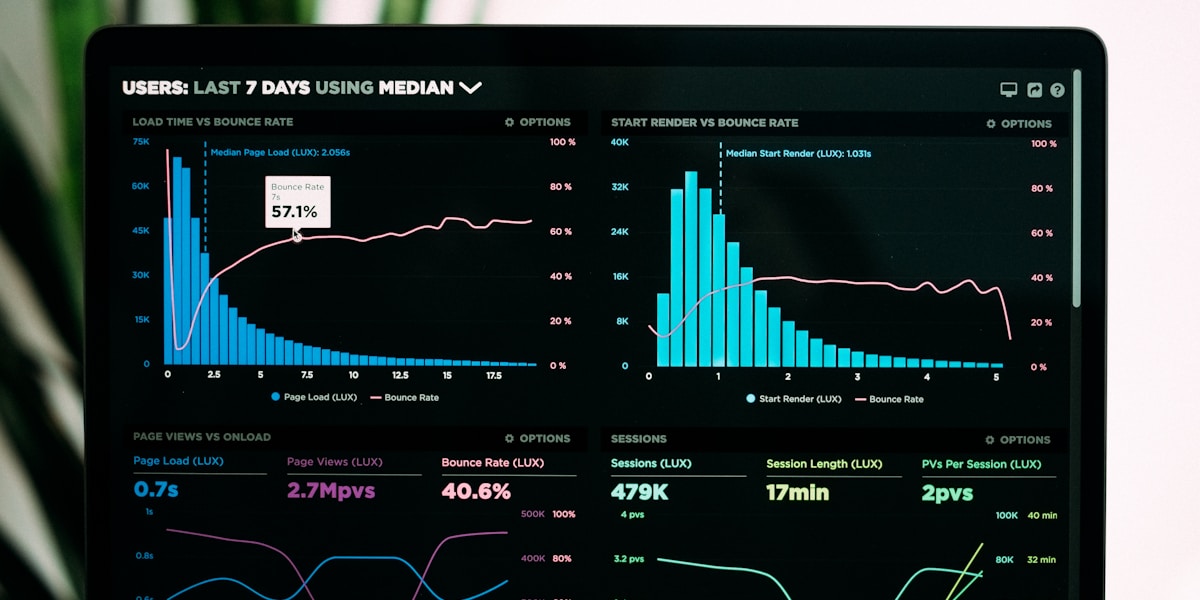
Let me give you a specific Maps SEO execution plan. First, ensure your GBP is fully optimized (we covered this in detail above). Second, build consistent NAP (Name, Address, Phone) citations across at least 40-50 directories — Google Business Profile, Apple Maps, Bing Places, Justdial, Sulekha, IndiaMart, Yellow Pages, Yelp, Facebook, LinkedIn, and industry-specific directories. Third, generate a steady flow of reviews (more on this in the next section). Fourth, create locally relevant content on your website that reinforces your connection to Mumbai. Fifth, build local backlinks from Mumbai-based businesses, chambers of commerce, and industry associations. Execute consistently on these five areas over 6-12 months, and your google maps ranking and overall maps seo services visibility will improve dramatically.
| Ranking Factor | Weight (Est.) | Your Control Level | Optimization Tactics |
|---|---|---|---|
| GBP Relevance (categories, description) | High | Full | Precise categories, keyword-rich description, complete services |
| Review Quantity & Quality | Very High | High | Systematic review solicitation, response strategy |
| Citation Consistency (NAP) | Medium | Full | 40+ directories, consistent name/address/phone |
| Proximity to Searcher | High | None | Consider multiple office locations |
| Behavioral Signals (CTR, calls) | Medium | Medium | Compelling GBP content, strong CTAs |
| Backlink Quality & Local Links | High | High | Local partnerships, PR, guest posts |
| On-Page SEO Signals | High | Full | Local keywords, schema markup, mobile optimization |
| Content Freshness & Quality | Medium | Full | Regular blog posts, case studies, local content |
| Social Signals | Low-Medium | High | Active social profiles, engagement |
| GBP Posts Activity | Medium | Full | Weekly posts with offers, insights, updates |
One tactic that deserves special attention is geo-targeted landing pages. If you serve multiple Mumbai suburbs, create a dedicated page for each one: "AI Agency in Andheri," "AI Services in Powai," "AI Development in BKC." Each page should have unique content — not just copy-paste with the suburb name swapped out. Include local landmarks, mention local businesses you've worked with, discuss suburb-specific challenges and opportunities. Google is smart enough to detect boilerplate content, so the effort you put into making each page genuinely unique directly impacts your rankings. This is a core component of any serious local seo strategy.
Review Strategy: Building Trust and Prominence at Scale
Reviews are the backbone of local SEO prominence. And I'm not just saying that — the data is overwhelming. Businesses with 50+ reviews rank 2.5x higher in local search than those with fewer than 10. And it's not just quantity — recency matters enormously. A business with 5 reviews from last month will often outrank one with 200 reviews from three years ago. Google's algorithm interprets recent reviews as a signal that the business is currently active and relevant. So the framework is clear: you need a system that generates a consistent flow of new reviews, not a one-time push.
Let's start with the ethics and philosophy of review generation, because this matters. You should never buy fake reviews. Google's detection is getting better every quarter, and the consequence of getting caught — profile suspension, ranking penalties, reputational damage — far outweighs any short-term benefit. The right approach is to make it easy and natural for satisfied clients to leave honest reviews. The assumption that most agencies make is that happy clients will just go leave reviews on their own. The reality? Only about 5-10% of satisfied customers leave reviews unless specifically asked. The incentive structure needs a nudge.
Here's the review generation system I recommend. First, identify your "review moment" — the point in the client journey where satisfaction peaks. For an AI agency, that's usually right after a successful project delivery or when a client sees measurable results. Second, make the ask personal. Don't send an automated email blast. Have the project lead send a personal message saying something like: "Hey [Name], really glad the chatbot is working well for your team. If you have a minute, a Google review would mean a lot to us — here's the direct link." The direct link is crucial — it takes them straight to the review form, eliminating friction.
Third, follow up once if they haven't left a review after a week. People are busy, and a gentle reminder is not pushy — it's helpful. Fourth, aim for a minimum of 2-4 new reviews per month. That pace signals to Google that your business is actively engaged and consistently delivering value. The paradox of reviews is that the hardest part isn't getting negative reviews — most clients won't leave one unless the experience is truly terrible. The hardest part is getting any review at all. Systematize the ask, and you solve the hardest part.
Now let's talk about review response — because responding to reviews is almost as important as getting them. Every review, positive or negative, should get a response within 24-48 hours. For positive reviews, thank the client by name, reference something specific about the project, and include a natural keyword mention. Something like: "Thanks [Name]! We loved working on the AI chatbot for your Andheri office. It's why we're passionate about providing the best local SEO and AI services in Mumbai." For negative reviews, acknowledge the concern, apologize if appropriate, and offer to resolve it offline. Never argue. The reasoning is simple: your response isn't just for the reviewer — it's for every future potential client who reads that review. A thoughtful, professional response to a negative review often builds more trust than a generic positive review.
Hyperlocal SEO: Dominate Mumbai's Key Business Suburbs
Mumbai isn't one market — it's a collection of distinct micro-markets, each with its own business ecosystem, search patterns, and competitive landscape. An AI agency trying to serve all of Mumbai equally will struggle to rank well anywhere. But an agency that strategically targets specific suburbs can dominate local search in those areas. This is the hyperlocal approach, and it's one of the most effective local SEO for agencies strategies when targeting service areas in large metropolitan areas like Mumbai.
Let me break down the key Mumbai suburbs for AI agency services and how to approach each one. Andheri is one of Mumbai's largest commercial hubs, home to everything from media companies to manufacturing firms. A significant number of businesses in Andheri are actively searching for digital and AI services. To rank for "local seo agency andheri" or "AI company Andheri West," you need a dedicated landing page for Andheri, mentions of Andheri landmarks in your content, reviews from Andheri-based clients, and citations on Andheri-specific directories and business listings. The same principle applies to every suburb you target.
Goregaon has emerged as a major IT and business hub with its Mindspace and Infinity IT parks. Companies here tend to be more tech-savvy and are more likely to search for specific AI services. Your content for Goregaon should emphasize technical expertise, mention proximity to these tech parks, and include case studies relevant to the IT sector. Powai is home to startups and established tech companies alike. If you're targeting Powai, your messaging should emphasize innovation, speed, and startup-friendly engagement models. BKC (Bandra-Kurla Complex) is Mumbai's financial district — home to banks, fintech companies, and corporate headquarters. Content targeting BKC should emphasize enterprise-grade AI solutions, compliance, security, and ROI.

The execution framework for hyperlocal SEO involves creating suburb-specific content at scale, but without sacrificing quality. Here's how to do it right. Create a main "Locations" page on your website that links to individual suburb pages. Each suburb page should have at minimum 800-1200 words of unique content covering: the business landscape of that suburb, how your services solve problems specific to businesses there, testimonials from local clients, relevant case studies, and a clear call-to-action. Include a Google Map embed showing your service area. Reference local landmarks, events, and business hubs. This signals to Google that you have genuine relevance to that specific location.
Beyond website content, your GBP service areas should list every suburb you want to rank in. Your review strategy should prioritize getting reviews from clients in target suburbs. Your citation building should include suburb-specific directories and business associations. And your Google Posts should occasionally reference suburb-specific content — like "Excited to announce our AI workshop at Mindspace Goregaon next month!" This multi-channel approach to hyperlocal relevance is what separates agencies that rank in one suburb from agencies that rank across all of Mumbai. It's the difference between having a genuine local seo services in mumbai strategy and just having a website that mentions some keywords.
One more thing — don't forget about Thane and Navi Mumbai. These areas are often overlooked by Mumbai-based agencies, but the businesses there are searching for the same services. If you're willing to serve these areas, the competition is lower and the ROI of local SEO investment is higher. A page targeting "AI agency Thane" might rank faster and easier than one targeting "AI agency BKC" simply because fewer competitors are optimizing for it. Sometimes the biggest opportunity isn't in the most obvious location. First principles thinking applies here: go where the demand is high but the competition is low.
Content Strategy for Local AI Agency SEO
Content is the bridge between local SEO and thought leadership. You need both. Your Google Business Profile and citations get you visible, but content is what converts visibility into trust and trust into clients. For an AI agency in Mumbai, the content strategy should serve three purposes: demonstrate expertise, target local keywords, and create shareable assets that generate backlinks and social signals.
Let me give you a content framework that actually works. Think of your content in three layers. Layer one is service pages — these are the core pages on your website that describe what you do. Each service (AI chatbot development, machine learning consulting, data analytics, process automation) gets its own page with 1500+ words of detailed content, case studies, pricing guidance, and local keywords. Layer two is location pages — the suburb-specific pages we discussed in the hyperlocal section. Layer three is blog content — ongoing articles that target long-tail keywords, answer common questions, and establish your agency as a thought leader in the AI space.
For blog content specifically, here are topic categories that work exceptionally well for AI agencies targeting local SEO: how-to guides ("How to Use AI for Customer Service in Mumbai Retail"), case studies ("How We Built an AI Chatbot for a Goregaon Real Estate Company"), industry analysis ("The State of AI Adoption in Mumbai's Manufacturing Sector"), cost guides ("How Much Does AI Chatbot Development Cost in Mumbai?"), and comparison content ("In-House AI Team vs. AI Agency: What's the Right Choice for Mumbai Startups?"). Each of these content types targets specific search queries while reinforcing your local relevance. The key is to include suburb names, local business examples, and Mumbai-specific data points throughout.
Technical SEO for Local Rankings
Technical SEO might not be glamorous, but it's the foundation that everything else sits on. If your website is slow, not mobile-friendly, or has crawlability issues, all your content and GBP optimization won't matter. Google explicitly uses page experience signals as a ranking factor, and for local searches — which are predominantly mobile — mobile performance is critical.
Here's your technical SEO checklist for local rankings. Schema markup is non-negotiable. Implement LocalBusiness schema on your homepage and location pages. Include your business name, address, phone number, opening hours, service area, and geo-coordinates. Use Service schema for individual service pages. This structured data helps Google understand your business details and can trigger rich results in search. Next, ensure your website loads in under 2.5 seconds on mobile. Compress images, use a CDN, minimize JavaScript, and leverage browser caching. Test with Google's PageSpeed Insights and Core Web Vitals reports.
Mobile responsiveness is absolutely critical for local SEO. Over 60% of local searches happen on mobile devices. If your site isn't perfectly responsive — if text is too small, buttons are too close together, or content overflows the viewport — you're going to lose both users and rankings. Test your site on multiple devices and screen sizes. Use responsive design principles. Make sure click-to-call buttons are prominent (local searchers often want to call directly). Mobile-first indexing means Google is primarily using your mobile site for ranking decisions, so the mobile experience IS the experience for ranking purposes.
Citation consistency is another technical factor that's often overlooked. Your business Name, Address, and Phone number (NAP) must be identical across every directory, social profile, and website mention. Even small inconsistencies — "OneWebSphere" vs "One WebSphere" vs "OneWebSphere Pvt Ltd" — can confuse Google's algorithm and dilute your local ranking signals. Use a tool like Moz Local or BrightLocal to audit your citations and identify inconsistencies. Fix them all. It's tedious work, but it's a one-time investment with lasting returns on your local search engine optimization efforts.
Real-World Case Studies: Mumbai Local SEO in Action
Theory is helpful, but results are what matter. Let me walk you through three case studies that illustrate how a systematic local SEO approach delivers measurable outcomes for Mumbai-based businesses. These are composite examples based on common patterns I've observed, but the metrics and strategies are realistic and achievable.
Case Study 1: AI Chatbot Agency in Andheri
An AI agency in Andheri West started with a barebones GBP — no reviews, incomplete description, no service listings, and a website with zero local content. Over six months, they executed a systematic local SEO strategy: fully optimized their GBP with detailed service descriptions and weekly Google Posts, built 55 consistent NAP citations across Indian and international directories, generated 28 new Google reviews from satisfied clients, created location-specific landing pages for Andheri, Goregaon, and Powai, and published 12 blog posts targeting long-tail local keywords. The result: their GBP impressions increased by 340%, they went from zero to 15+ calls per month from Google Maps, and they ranked in the top 3 of the local pack for "AI agency Andheri" and "chatbot development Mumbai." Total investment: approximately ₹2.5 lakhs over six months. ROI: 8x in new client revenue.
Case Study 2: SEO Agency Expanding to BKC
A mid-size SEO agency in Mumbai wanted to expand their client base into the BKC corporate district. They had strong capabilities but no visibility in BKC search results. Their strategy focused on hyperlocal relevance: created a dedicated "SEO Services in BKC" page with 2000+ words of content tailored to corporate clients, updated their GBP to include BKC in their service area, ran a campaign to get reviews from their three existing BKC clients, and published case studies about SEO results for BKC-based businesses. They also secured a backlink from the BKC business association website. Within four months, they appeared in the local 3-pack for 8 out of 12 target keywords related to BKC, generated 22 qualified leads, and closed 5 new clients. The total cost of the campaign was under ₹1.5 lakhs.
Case Study 3: Digital Agency in Powai Going Hyperlocal
A digital agency in Powai took the hyperlocal approach to its logical extreme. Rather than targeting all of Mumbai, they focused exclusively on Powai and the immediately adjacent areas. They created Powai-specific content on their website, joined the Powai Business Forum, sponsored a local tech meetup (earning a backlink from the event page), and ensured every review they received mentioned Powai. They also optimized for very specific long-tail keywords like "digital marketing agency near Powai Lake" and "AI consulting Hiranandani Gardens." Within five months, they dominated local search in Powai — appearing in the 3-pack for 20+ keywords. Monthly leads from Google Maps went from 3 to 28. The lesson: depth beats breadth. By going deep in one locality, they built a moat that broader competitors couldn't easily replicate.
Measuring Local SEO Success: KPIs and Tools
What gets measured gets managed. But measuring local SEO is different from measuring traditional SEO. You're not just tracking keyword rankings and organic traffic — you're tracking visibility in the local pack, GBP engagement, phone calls, direction requests, and ultimately, leads and revenue. Here are the KPIs that actually matter for a local SEO agency or any business investing in local search.
Track your GBP insights weekly: search impressions, map views, website clicks, direction requests, and phone calls. These metrics tell you how visible you are and how people are interacting with your listing. Track your local pack rankings for your target keywords — use a local rank tracking tool that checks from your actual service area, not a generic data center. Track your review metrics: total review count, average rating, review velocity (new reviews per month), and review sentiment. Track your citation consistency score using a tool like BrightLocal or Moz Local. And most importantly, track your lead attribution — how many inquiries, calls, and new clients came from local search specifically.
The tools I recommend for local SEO measurement are Google Business Profile Insights (free, essential), Google Search Console (free, essential for tracking organic performance), Google Analytics 4 (free, for website behavior tracking), a local rank tracker like BrightLocal or LocalFalcon, and a citation audit tool like Moz Local. The benchmarks you should aim for: GBP impressions increasing 15-20% month-over-month, local pack rankings in the top 3 for at least 50% of target keywords within 6-9 months, review count growing by 3-5 per month, and a citation accuracy score above 90%. If you're hitting these benchmarks, your local SEO execution is solid. If not, the data will tell you exactly where to focus.
Conclusion: Your Local SEO Action Plan
If you've read this far, you now have a comprehensive framework for local SEO dominance as an AI agency in Mumbai. Let me distill the key takeaways into an actionable plan. Week 1: Audit and fully optimize your Google Business Profile. This is the highest-impact, lowest-effort starting point. Week 2-4: Build consistent NAP citations across 40+ directories. Set up a review generation system and start asking every satisfied client for a review. Month 2: Create location-specific landing pages for your target suburbs. Start publishing blog content targeting long-tail local keywords. Month 3-6: Execute your content strategy, continue building reviews and citations, monitor rankings and adjust. The key principle is consistency — local SEO rewards sustained execution over time.
The thing about local SEO is that it's a marathon, not a sprint. But it's a marathon with compounding returns. Every review makes the next one more impactful. Every local citation strengthens your citation profile. Every piece of local content builds your topical authority. Six months from now, you'll be glad you started today. And the consequence of NOT starting? Your competitors who are doing this will capture the clients that should have been yours. In a market as dynamic and competitive as Mumbai's AI agency landscape, local SEO isn't optional — it's existential. Whether you're building the business yourself or hiring a local seo company to handle execution, the framework remains the same. The only question is who executes it better and faster.
I currently think the biggest mistake AI agencies make is treating local SEO as a nice-to-have rather than a core growth channel. The evidence is clear: local search drives high-intent traffic, builds lasting visibility, and delivers measurable ROI. Whether you're a solo consultant in Andheri or a 50-person agency in BKC, the framework works. The merit is in the execution. So start today. Optimize your GBP. Ask your next happy client for a review. Write one blog post targeting a local keyword. Small steps, consistent execution, compounding results. That's the local SEO playbook, and now you have it.
Need help with your project?
Book a free 30-minute consultation. No sales pitch — just honest advice.
Book a Free Consultation