
E-Commerce Website Development in Mumbai: Shopify vs Custom vs WooCommerce
E-Commerce Website Development in Mumbai: Shopify vs Custom vs WooCommerce
I currently think the biggest decision any Mumbai business owner faces when going online isn't about logos or colour palettes. It's about the foundation. The platform you choose for your e-commerce website isn't just a technical detail — it's a strategic trade-off that affects your speed to market, your operational costs, your ability to scale, and honestly, your sanity as a founder.
Here's the paradox: Mumbai is home to over 200,000 small and medium businesses, and a massive chunk of them are now selling online. But most of them are making the platform decision based on what their nephew recommended, or what they saw a competitor use, or — worse — what was cheapest at the time. That's not a framework for decision-making. That's a recipe for expensive migrations two years down the line.
The thing is, every platform has a worldview baked into it. Shopify assumes you want simplicity and speed. WooCommerce assumes you already know WordPress and want flexibility. Custom development assumes you need complete autonomy over every pixel and API call. None of these are inherently wrong. The question is: which assumption matches YOUR reality?
I've watched Mumbai businesses navigate this decision hundreds of times. Some got it right and scaled beautifully. Others got it wrong and spent months untangling the consequences. The pattern is always the same: the businesses that make this decision based on evidence and reasoning tend to win. The ones that make it based on emotion, bias, or convenience tend to struggle.
In this guide, I'm going to break down all three options — Shopify, WooCommerce, and custom development — from first principles. We'll look at the actual costs (not the marketing numbers), the real trade-offs, the scalability ceilings, and the SEO implications. I'll share case studies from Mumbai D2C brands that made these choices and lived with the consequences. By the end, you won't just know which platform is 'best.' You'll know which platform is best FOR YOU.
Because here's the truth nobody tells you: the best platform is the one that aligns with your current stage, your team's capabilities, your budget constraints, and your growth ambitions. A ₹50,000 Shopify store can outperform a ₹10,00,000 custom build if the owner executes better. The platform doesn't make the business. But the wrong platform can definitely break it.

The E-Commerce Landscape in Mumbai: Why This Decision Matters More Than You Think
Let's start with some perspective. India's e-commerce market is projected to hit $200 billion by 2027. Mumbai, being the financial capital, accounts for a disproportionate share of that. We're talking about everything from Bandra-based D2C skincare brands to Andheri electronics retailers to Colaba artisan jewellery sellers — everyone is going digital.
But here's what I find fascinating: the growth isn't just in the big players. The real explosion is in small and medium businesses. A recent report suggested that Maharashtra alone saw a 340% increase in new e-commerce registrations post-pandemic. That's not a trend. That's a tectonic shift. The incentive to go online has never been stronger, and the barriers to entry have never been lower.
Now let's assume you're one of these businesses. Maybe you're running a successful offline store in Linking Road, and you've been thinking about selling online. Or maybe you're a D2C founder who's been selling through Instagram DMs and marketplace listings, and you're ready for your own website. In either case, the platform question is looming. And the probability of making the right choice depends entirely on how well you understand the options.
The Mumbai e-commerce ecosystem has some unique characteristics that affect this decision. First, logistics infrastructure is excellent — same-day delivery is almost expected. Companies like Delhivery, Shiprocket, and Blue Dart have made Mumbai a logistics hub. Second, payment gateway integration is non-negotiable (UPI, credit cards, EMI options). Third, WhatsApp commerce is massive here — Mumbai runs on WhatsApp, and your platform needs to play nice with WhatsApp Business API. Fourth, multi-language support matters — Mumbai is multilingual, and your store should reflect that.
I currently think most businesses in Mumbai underestimate how much their platform choice affects customer experience. It's not just about the admin panel you use to manage orders. It's about page load speed on a Jio 4G connection. It's about mobile responsiveness when 78% of your traffic comes from phones. It's about whether your checkout process supports COD (because let's be honest, cash on delivery is still huge in India). It's about whether your product pages load in 2 seconds or 8 seconds — because every second of delay costs you 7% in conversions.
The consequence of choosing wrong? You end up spending months and lakhs migrating to a new platform while losing customers in the process. I've seen this happen time and again. A brand starts on WooCommerce because it was 'free,' then realizes they need to hire a WordPress developer every time they want to change something, then migrates to Shopify, then realizes Shopify's transaction fees are eating their margins, then considers custom development. That's not a growth strategy. That's a platform hopping nightmare that costs lakhs and months of lost momentum.
The evidence is clear: businesses that make the platform decision once and commit to it for at least 2-3 years tend to outperform those that switch every 6-12 months. Stability matters more than perfection. The philosophy here is straightforward: choose based on your current constraints and future goals, commit to the decision, and execute relentlessly.
Shopify: The Quick Start That Comes With Trade-Offs
Let's talk Shopify. I currently think Shopify is the most popular choice for Mumbai D2C brands for a reason — it removes friction. You can literally launch a store in a weekend. The dashboard is intuitive, the templates are professional, and the app ecosystem means you don't need to write a single line of code for 90% of what you need.
But let's examine this from first principles. What Shopify actually gives you is a managed e-commerce environment. Think of it like renting a fully furnished apartment. Everything works. The plumbing is fine. The electricity is on. But you can't knock down walls, you can't change the layout, and you're paying rent every single month — forever. The trade-off is clear: convenience in exchange for control.
Here's the evidence-based breakdown of Shopify for Mumbai businesses:
Shopify Pros
- Speed to market: You can launch in 1-2 weeks, not months. For Mumbai's fast-moving D2C space, this is massive
- No server management: Shopify handles hosting, SSL, updates, and security — you focus on selling
- Built-in payment processing: Shopify Payments integrates seamlessly, and third-party gateways like Razorpay work well
- Mobile-first design: Most themes are optimized for mobile out of the box — critical when 78% of traffic is mobile
- App ecosystem: 8,000+ apps for everything from WhatsApp marketing to inventory management
- Scalability: Shopify Plus handles enterprise-level traffic (Mumbai's Nykaa and Mamaearth use it)
- Multi-channel selling: Sell on Instagram, Facebook, Amazon, and your website from one dashboard
- Indian payment support: UPI, Paytm, COD, EMI — all supported natively or via apps
- Reliability: 99.99% uptime guarantee — your store doesn't go down because your hosting did
Shopify Cons
- Monthly costs add up: Basic plan is ₹1,499/month, but apps can easily push it to ₹5,000-15,000/month
- Transaction fees: 0.5%-2% if you don't use Shopify Payments (which isn't available in India yet in full capacity)
- Customization ceiling: You're limited to Liquid templating language; deep customization requires workarounds
- SEO limitations: URL structure is rigid (e.g., /collections/ instead of custom paths), canonical tags can be tricky
- Vendor lock-in: Migrating away from Shopify is painful and expensive — you don't own the code
- App dependency: Many essential features require paid apps, each with their own monthly fee
- Checkout customization: Even on higher plans, checkout customization is limited compared to custom solutions
- API rate limits: If you're building custom integrations, you'll hit limits faster than you'd expect
- Theme lock-in: Switching themes often requires significant redesign work and can break customizations
The thing is, Shopify's pricing in India requires careful calculation. The Basic plan at ₹1,499/month looks attractive. But let's assume you need: a product review app (₹500/month), an email marketing tool (₹800/month), a WhatsApp integration (₹1,000/month), an inventory management app (₹1,200/month), and a custom theme (one-time ₹30,000-50,000). Suddenly you're looking at ₹3,500+/month in recurring costs plus the initial theme investment. And that's before you've added a single product.
And here's a trade-off nobody mentions: Shopify's transaction fees. Since Shopify Payments isn't fully available in India, you'll use Razorpay or another gateway. Shopify charges an additional 0.5%-2% transaction fee on top of your payment gateway's fees. On a ₹10 lakh monthly revenue, that's ₹5,000-20,000 extra. Per month. Over a year, that's ₹60,000-2,40,000 in pure transaction fees. That's not a rounding error. That's a significant business cost.
Let's also talk about Shopify's ecosystem in Mumbai specifically. There's a robust community of Shopify developers, theme customization experts, and app integrators. This is an advantage — finding help is easy. But it also means you're dependent on a ecosystem that you don't control. If Shopify changes its pricing (which it has done multiple times), you have no recourse. You're a tenant, not an owner.
My perspective: Shopify wins when speed matters more than control. If you're a Mumbai D2C brand that needs to launch quickly, test product-market fit, and doesn't have a technical team, Shopify is the logical first choice. The merit is in its simplicity. But go in with eyes open about the recurring costs and the vendor lock-in. The probability of regret is highest when you don't understand what you're signing up for.
WooCommerce: The WordPress Option That Demands More From You
WooCommerce is what happens when you take the world's most popular CMS (WordPress) and add e-commerce capabilities to it. I currently think WooCommerce is underestimated in Mumbai, partly because it doesn't have the marketing muscle of Shopify, and partly because the 'it's free!' narrative gives people false expectations.
Let's apply first principles. WooCommerce is open-source and free to install. That's true. But free software doesn't mean free business. You still need hosting (₹500-5,000/month), a domain (₹800/year), a theme (₹5,000-15,000), plugins (₹0-50,000/year), and most importantly, someone who knows WordPress (which costs money). The assumption that 'free' means 'no cost' is a logical fallacy that traps many first-time founders.
The philosophy behind WooCommerce is different from Shopify. WooCommerce assumes you want ownership and control. You own the code, you own the data, you own the server. That's autonomy. But autonomy comes with responsibility — you're responsible for updates, security patches, speed optimization, and backups. It's like owning a house versus renting an apartment. More freedom, but also more maintenance.
WooCommerce Pros
- True cost advantage (sort of): The plugin itself is free; you only pay for hosting and premium extensions
- Full ownership: You own everything — the code, the data, the server. No vendor lock-in whatsoever
- WordPress ecosystem: Access to 50,000+ WordPress plugins for SEO, marketing, and functionality
- Content marketing powerhouse: WordPress is the best CMS for content-driven e-commerce (think blogs, guides, resources)
- Customization flexibility: PHP-based, so any developer can modify anything — no templating language restrictions
- SEO control: Full control over URL structures, meta tags, schema markup, and site architecture
- No transaction fees: WooCommerce doesn't charge extra fees; you only pay your payment gateway
- Multi-currency and multi-language: Easy to implement for businesses selling internationally
- Community support: Massive global community; virtually any problem has been solved and documented
WooCommerce Cons
- Technical maintenance: You need to manage updates, security, and performance — or pay someone to do it
- Security responsibility: WordPress sites are the #1 target for hackers; you need to invest in security
- Speed optimization: WooCommerce stores can be slow without proper caching, CDN, and optimization
- Plugin conflicts: Too many plugins can break your site; compatibility issues are common and frustrating
- Scalability concerns: High-traffic WooCommerce stores need serious server optimization to perform well
- Developer dependency: Changes often require a WordPress developer; the learning curve is real
- Updates can break things: WordPress core, theme, and plugin updates sometimes cause compatibility issues
- Support is community-based: No dedicated support team; you rely on forums and documentation
- Database bloat: Over time, WordPress databases can become bloated, affecting performance
The trade-off here is clear: WooCommerce gives you more control and lower platform costs, but demands more technical competence. If you're a Mumbai business owner who also needs a content strategy (blog, guides, educational content), WooCommerce's WordPress foundation is a massive advantage. Your blog and your store share the same system, the same analytics, the same URL structure. That's a coherence that Shopify simply can't match.
But let's be honest about the 'free' claim. A typical WooCommerce store for a Mumbai business needs: hosting (₹1,500/month on a good managed host like SiteGround or Cloudways), a premium theme like Flavflavor or GeneratePress (₹8,000-12,000 one-time), essential plugins like WooCommerce Subscriptions, WooCommerce Memberships, Yoast SEO Premium, WP Rocket for caching (₹30,000-50,000/year total), and a developer on retainer (₹10,000-25,000/month). That's not free. That's ₹2-4 lakhs/year.
I currently think WooCommerce is the right choice when content is your differentiator and you have (or can hire) technical talent. The evidence supports this: many successful Indian brands like Paper Boat and The Souled Store have used WooCommerce for their content-heavy e-commerce strategies. But if you don't have technical skills, WooCommerce will become your biggest headache. The probability of a WooCommerce store running smoothly without any technical knowledge is, frankly, low.
One more thing about WooCommerce in the Mumbai context: the developer ecosystem is excellent. Mumbai has thousands of WordPress developers at various price points. Finding a good WooCommerce developer is easier and typically cheaper than finding a Shopify Liquid developer or a React/Next.js developer. This is a genuine advantage for businesses that need ongoing customization.
Custom Development: The Full Control Option That Demands Full Commitment
Custom e-commerce development is the 'build your own house' option. We're talking about frameworks like Next.js, React, Vue.js for the frontend, with Node.js, Python (Django), or Ruby on Rails for the backend. Databases like PostgreSQL, MongoDB, or Supabase. This is where you get complete autonomy over every aspect of your store.
The logic behind choosing custom development comes down to three things: performance, flexibility, and scalability. When you build from scratch, you can optimize for exactly what you need. No bloat. No unused features. No paying for apps you don't use. Every line of code serves a purpose. That's the first-principles argument for custom development.
But here's the reality check: custom development is expensive and time-consuming. I'm talking ₹5-25 lakhs for the initial build, 3-6 months of development time, and you need a skilled development team (either in-house or an agency like OneWebSphere). This isn't a decision to make lightly. The consequence of choosing custom too early is that you burn through your runway before you've validated your product.
Custom Development Pros
- Complete control: Every pixel, every API call, every user flow — it's yours to design and optimize
- Performance optimization: Build exactly what you need; no bloat means faster load times and better Core Web Vitals
- Scalability: Handle massive traffic without platform limitations — grow from 100 to 1,00,000 users
- Unique UX: Create shopping experiences that no template can replicate — your brand stands out
- API-first architecture: Integrate with any system — ERP, CRM, WhatsApp, custom logistics platforms
- SEO excellence: Full control over technical SEO, Core Web Vitals, and site architecture
- No recurring platform fees: After development, your costs are hosting and maintenance only
- Competitive advantage: Custom features become your moat against competitors who use templates
- Data ownership: Complete access to your data for analytics, machine learning, and business intelligence
Custom Development Cons
- High upfront cost: ₹5-25 lakhs depending on complexity — not feasible for early-stage businesses
- Longer development timeline: 3-6 months minimum for a proper build — you're not launching next week
- Ongoing maintenance: You need developers for every change, bug fix, or update — ongoing cost
- Technical debt risk: Poor architecture decisions become expensive to fix later — choose wisely
- Team dependency: If your developer leaves, you're in trouble — documentation and knowledge transfer matter
- No built-in ecosystem: No app store; every feature must be built or integrated manually
- Testing burden: You're responsible for QA, security testing, and performance testing — no safety net
- Marketplace integration complexity: Connecting to Amazon, Flipkart requires custom API work
- Hiring challenges: Finding skilled developers in Mumbai who understand e-commerce is competitive and expensive
The paradox of custom development is this: it gives you the most freedom but also the most responsibility. When Shopify goes down, Shopify fixes it. When your custom site goes down at 2 AM during a sale, guess who's waking up? You or your developer. The autonomy is real, but so is the accountability.
I currently think custom development makes sense for Mumbai businesses in specific scenarios: when you're processing ₹1 crore+ monthly revenue and the platform fees are significant enough to justify the investment, when you have a unique business model that standard platforms can't support, when you need deep integrations with enterprise systems, or when performance is your competitive advantage (think: luxury brands where page speed and visual experience directly affect conversion rates).
The evidence I've seen suggests that custom development is worth it when the business has validated product-market fit. Building a custom store before you've proven demand is like building a mansion before you've sold your first house. Start simple, validate, then invest in custom when the numbers justify it. The framework here is simple: if the cost of platform limitations exceeds the cost of custom development, build custom. Until then, use a platform.
One more consideration: headless commerce. This is a hybrid approach where you use a backend like Shopify or BigCommerce but build a custom frontend with Next.js or React. You get the commerce features of a platform with the design freedom of custom development. It's more expensive than standard Shopify but less expensive than fully custom. For Mumbai businesses in the ₹50L-₹5Cr annual revenue range, headless commerce is increasingly worth exploring.
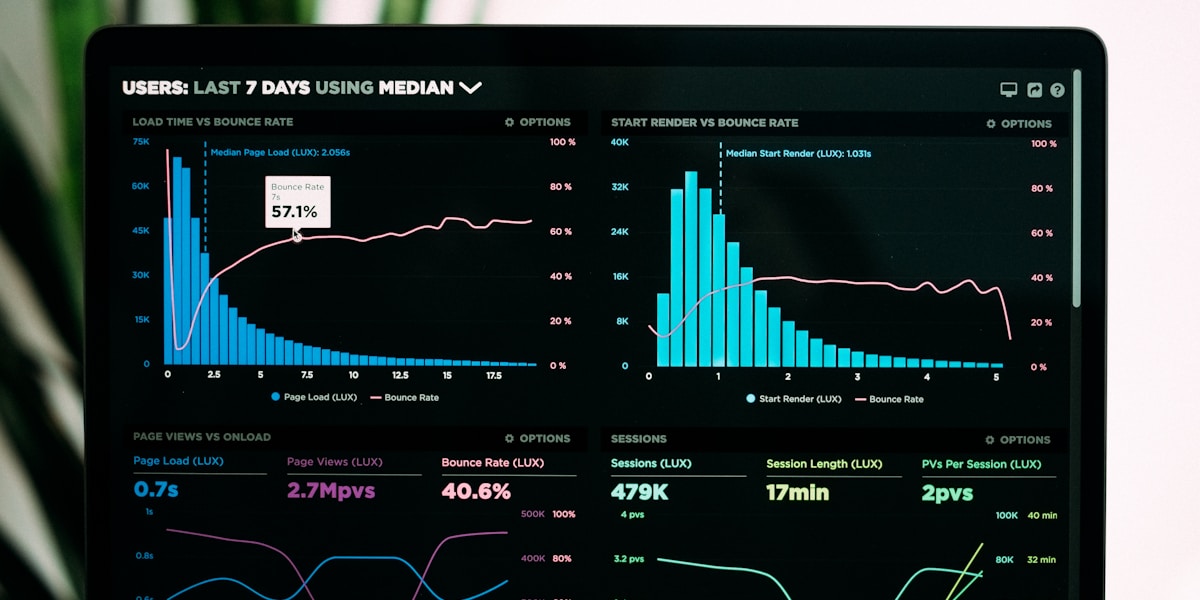
Head-to-Head Comparison: The Platform Battle Table
Alright, let's put all three platforms side by side. I've created a comprehensive comparison based on the factors that actually matter for Mumbai businesses. This isn't about features — you can find feature lists anywhere. This is about the trade-offs that affect your bottom line and your daily operations.
The evidence from Mumbai's market suggests that most businesses focus on the wrong metrics when comparing platforms. They look at monthly cost without calculating 3-year TCO. They look at features without considering which features they actually need. They look at ease of setup without considering ease of long-term maintenance. Let's fix that.
| Factor | Shopify | WooCommerce | Custom (Next.js/React) |
|---|---|---|---|
| Upfront Cost | ₹5,000-50,000 (theme + setup) | ₹30,000-1,00,000 (hosting + theme + plugins) | ₹5,00,000-25,00,000 (full development) |
| Monthly Cost | ₹1,499-15,000+ | ₹2,000-8,000 (hosting + plugins) | ₹5,000-20,000 (hosting + maintenance) |
| Time to Launch | 1-2 weeks | 2-6 weeks | 3-6 months |
| Technical Skill Needed | Low | Medium-High | Very High |
| SEO Control | Good (limited URL structure) | Excellent (full control) | Excellent (full control) |
| Scalability | High (managed by Shopify) | Medium (needs optimization) | Very High (if built well) |
| Customization | Limited (Liquid templates) | High (PHP-based) | Unlimited |
| Mobile Optimization | Excellent (built-in) | Good (theme-dependent) | Excellent (if built well) |
| Payment Gateway Support | Good (limited in India) | Excellent (all gateways) | Excellent (all gateways) |
| COD Support | Via apps | Native | Custom integration |
| WhatsApp Integration | Via apps | Via plugins | Custom (more powerful) |
| Multi-language Support | Via apps | Native (WPML) | Custom (full control) |
| Vendor Lock-in Risk | High | Low | None |
| Ongoing Maintenance | Minimal (managed) | Moderate (self-managed) | High (need developer) |
| Best For | Quick launch, non-technical founders | Content-heavy stores, budget-conscious | High-revenue, unique requirements |
The table tells a story, doesn't it? There's no single 'winner.' Each platform excels in different areas. Shopify wins on speed and simplicity. WooCommerce wins on content and cost. Custom development wins on performance and flexibility. The question isn't 'which is best?' The question is 'best for what?'
Let me add some nuance to the comparison. The 'Technical Skill Needed' row deserves special attention. If you're a Mumbai business owner who's also the de facto IT department, Shopify's low technical barrier is genuinely valuable. But if you have a developer on your team or a relationship with an agency, the technical advantage of Shopify diminishes significantly. The trade-off shifts toward WooCommerce or custom, depending on your specific needs.
The 'Vendor Lock-in Risk' row is also critical. Shopify's lock-in is real: your products, customers, orders, and content live on Shopify's servers. Migrating away means exporting everything and rebuilding on a new platform. It's possible, but expensive and time-consuming. WooCommerce and custom development give you data portability from day one. For businesses that value autonomy, this matters more than any feature comparison.
Real Cost Breakdown for Mumbai Businesses: The 3-Year TCO Analysis
Now let's get into the numbers that actually matter. I currently think the biggest mistake businesses make is comparing only the upfront costs. The real comparison should be Total Cost of Ownership (TCO) over 3 years. Let's break this down for a typical Mumbai D2C brand doing ₹5-10 lakhs in monthly revenue.
Let's assume a few things: you need a professional-looking store, basic integrations (payment gateway, shipping, analytics), mobile optimization, SEO setup, and regular maintenance. Here's what each platform actually costs over a 3-year period:
| Cost Component | Shopify (3 Years) | WooCommerce (3 Years) | Custom (3 Years) |
|---|---|---|---|
| Platform/Development | ₹18,000 (Basic plan) | ₹0 (free plugin) | ₹12,00,000 (initial build) |
| Theme/Design | ₹40,000 (premium theme) | ₹15,000 (premium theme) | Included in development |
| Apps/Plugins | ₹1,80,000 (₹5,000/month avg) | ₹90,000 (₹2,500/month avg) | ₹60,000 (custom integrations) |
| Hosting | Included | ₹54,000 (₹1,500/month) | ₹1,80,000 (₹5,000/month) |
| Developer/Agency Fees | ₹0-1,80,000 (optional) | ₹3,60,000 (₹10,000/month retainer) | ₹3,60,000 (₹10,000/month maintenance) |
| Transaction Fees | ₹1,80,000 (1% on ₹50L revenue) | ₹0 | ₹0 |
| Security/SSL | Included | ₹15,000 (security plugins) | ₹30,000 (security measures) |
| Total 3-Year TCO | ₹4,98,000-6,78,000 | ₹6,34,000 | ₹18,30,000 |
| Monthly After Year 3 | ₹6,000-15,000+ | ₹4,000-10,000 | ₹15,000-30,000 |
Interesting, right? Shopify isn't as cheap as it seems when you factor in apps and transaction fees. WooCommerce isn't as free as the marketing suggests. And custom development has a massive upfront cost but potentially lower ongoing costs if you have an in-house team.
But here's the trade-off nobody puts in the spreadsheet: opportunity cost. If spending 3-6 months building a custom store means you miss the festive season (Diwali, Navratri), the cost isn't just the developer fees. It's the revenue you lost by not being live. For a Mumbai brand doing ₹5 lakhs/month, a 3-month delay costs ₹15 lakhs in potential revenue. That changes the calculation significantly. The consequence of delay isn't just time — it's money.
Let me also highlight something from the table: the 'Monthly After Year 3' row. This is where the long-term math gets interesting. Shopify's costs remain high because you're always paying for the platform, apps, and transaction fees. WooCommerce's costs can be lower if you optimize. Custom development's costs depend on your maintenance needs — a well-built site might need minimal ongoing work.
My perspective on the numbers: if you're starting out and testing product-market fit, Shopify's faster launch time often justifies the higher ongoing costs. If you're established and need content marketing, WooCommerce's TCO is competitive. If you're doing ₹1 crore+ annually and need unique features, custom development's TCO becomes justifiable. The key insight is that the 'cheapest' option depends on your time horizon and your business stage.
Case Studies: Mumbai D2C Brands That Made the Platform Choice
Theory is one thing. Real-world consequences are another. Let me share three fictional case studies based on real patterns I've observed in the Mumbai D2C ecosystem. These represent common scenarios you might recognize — and the lessons are directly applicable to your own decision.
Case Study 1: Mumbai Skincare Co. (Shopify to Custom Migration)
Priya started her skincare brand in Bandra, initially selling through Instagram. She launched on Shopify Basic, spending ₹35,000 on setup and theme. First year was great — she hit ₹3 lakhs/month in sales. By month 18, she was doing ₹12 lakhs/month. That's when the problems started. Shopify's transaction fees (she was using Razorpay) were costing her ₹12,000/month. The apps she needed — subscription management, loyalty program, advanced analytics — added ₹8,000/month. Her Shopify bill was ₹15,000/month, and her developer was charging ₹20,000/month for custom workarounds.
The consequence: She migrated to a custom Next.js build with OneWebSphere. The migration cost ₹8 lakhs and took 3 months. But her monthly costs dropped to ₹12,000 (hosting + maintenance), transaction fees went to zero, and her page load time dropped from 4.2 seconds to 1.1 seconds. Her conversion rate increased by 23% in the first month post-migration. Within 6 months, the migration had paid for itself through cost savings and increased revenue.
The lesson: Shopify was the right first choice. Custom was the right second choice. The key was knowing WHEN to make the switch. Priya's framework was simple: when the cost of staying on Shopify (fees + limitations + workarounds) exceeded the annualized cost of custom development, it was time to migrate. That's evidence-based decision-making at its finest.
Case Study 2: CraftBrew Mumbai (WooCommerce Success Story)
Rahul's speciality coffee brand chose WooCommerce from day one. His reasoning was first-principled: his business was content-driven. He needed a blog, brewing guides, origin stories, and a subscription model. WordPress was the natural fit. He invested ₹75,000 upfront (hosting, theme, plugins, developer setup) and ₹12,000/month in ongoing costs.
Two years in, his WooCommerce store does ₹8 lakhs/month. His content drives 40% of his organic traffic. His blog posts rank on Google for terms like 'best coffee beans in Mumbai' and 'how to brew cold coffee at home.' His SEO advantage comes directly from WooCommerce's WordPress foundation — full control over URL structure, schema markup, and content architecture. He's built a content moat that competitors on Shopify can't easily replicate.
The trade-off: Rahul spends about 8 hours/week on site maintenance and works closely with his WordPress developer. But the content-driven traffic he gets from organic search saves him ₹2-3 lakhs/month in paid advertising. The evidence supports his choice: for content-first brands, WooCommerce's SEO capabilities are a genuine competitive advantage. The philosophy here is that the right platform isn't always the easiest — it's the one that aligns with your core differentiator.
Case Study 3: LuxuryHaat Mumbai (Custom From Day One)
Amit's luxury home décor brand had a unique requirement: customers needed to visualize products in their space using AR (augmented reality). Neither Shopify nor WooCommerce could support this out of the box. He invested ₹18 lakhs in a custom build using React + Node.js with a headless commerce architecture.
The result: His store loads in 0.8 seconds, the AR feature increased his average order value by 35%, and his unique shopping experience got featured in Architectural Digest India. His monthly costs are ₹25,000 (hosting + maintenance + developer), but his average order value is ₹45,000 — the highest in his category. The ROI on his custom development investment was positive within 8 months.
The philosophy here: sometimes the upfront investment is justified when it creates a competitive moat. Amit's AR feature can't be replicated on Shopify or WooCommerce without significant workarounds. It's his differentiator. The merit of custom development isn't just technical — it's strategic. When your technology IS your competitive advantage, investing in custom makes business sense.
The Hybrid Approach: Start Simple, Scale Smart
Here's what I currently think is the most underrated strategy in Mumbai e-commerce: the hybrid approach. Instead of agonizing over the 'permanent' choice, start on Shopify (or even WooCommerce), validate your business model, and migrate to custom when the numbers justify it.
The logic is straightforward. When you're starting, your biggest risk isn't platform limitations — it's whether anyone will buy your product. Shopify lets you test that hypothesis with minimal investment. If the hypothesis is validated (you're doing ₹5+ lakhs/month), then you can invest in a custom build that's tailored to your specific needs. This is the lean startup philosophy applied to platform selection.
This approach follows lean startup philosophy: build the minimum, measure everything, learn fast, and iterate. The consequence of starting custom before validation is you might build a beautiful, feature-rich store for a product nobody wants. The consequence of staying on Shopify too long is you overpay in transaction fees and app subscriptions. The hybrid approach minimizes both risks.
Here's a practical framework for the hybrid approach:
- Stage 1 (₹0-5L/month revenue): Shopify or WooCommerce. Focus on product-market fit. Don't optimize for scale you haven't achieved yet.
- Stage 2 (₹5L-20L/month): Evaluate. Are platform limitations costing you money? Is your bill over ₹15,000/month? Are you hitting customization ceilings?
- Stage 3 (₹20L+/month): Custom development makes financial sense. Calculate the ROI: platform fees saved vs. development cost. The math usually works out.
- Migration trigger: When annual platform fees + apps + transaction fees exceed 30% of what a custom build would cost annually.
The trade-off in the hybrid approach is time and migration effort. You will eventually need to migrate. But the evidence suggests that migrating from a validated, revenue-generating store is easier than building custom from scratch with no data on what actually works. You'll have real user data, real revenue numbers, and real feature requirements to guide your custom build.
I've also seen a variant of this approach work well: start on Shopify, build a headless frontend with Next.js when you need more control, and eventually transition to fully custom if needed. This gives you incremental control without the full upfront investment of custom development. It's a middle path that many Mumbai brands are finding attractive.
| Revenue Stage | Recommended Platform | Monthly Budget | Key Focus |
|---|---|---|---|
| ₹0-2L/month | Shopify Basic | ₹5,000-8,000 | Product-market fit, customer acquisition |
| ₹2-5L/month | Shopify Standard | ₹10,000-15,000 | Conversion optimization, retention |
| ₹5-20L/month | Shopify Advanced or WooCommerce | ₹15,000-30,000 | Scale operations, reduce platform dependency |
| ₹20L-1Cr/month | Custom Development | ₹20,000-50,000 | Performance, unique features, full control |
| ₹1Cr+/month | Enterprise Custom or Shopify Plus | ₹50,000-2,00,000 | Enterprise integrations, global scale |
SEO Implications: What Mumbai Businesses Need to Know
I can't talk about platform choice without addressing SEO, because for Mumbai businesses, organic search is often the highest-ROI channel. Let me break down the SEO trade-offs for each platform with the nuance this topic deserves.
Shopify's SEO is good but constrained. You get basic SEO features (meta titles, descriptions, alt text), but your URL structure is rigid. You can't change /collections/skincare-products/ to /mumbai-skincare/. Your blog lives on a subdomain (not ideal for SEO). And canonical tags can get messy with product variants. For most businesses, this is fine. For SEO-focused brands, this is limiting. The evidence shows that Shopify stores can rank well, but they often need more effort to achieve the same results as WordPress or custom sites.
WooCommerce's SEO is excellent because it runs on WordPress, which is the world's most SEO-friendly CMS. Full control over URL structure, breadcrumbs, schema markup, and internal linking. Your blog is native, not a bolt-on. Yoast or Rank Math give you granular SEO control. This is why content-heavy brands tend to perform better on WooCommerce. The probability of achieving strong organic rankings is highest with WooCommerce, assuming you create quality content.
Custom development's SEO potential is the highest — but only if your developer understands SEO. I've seen custom stores that are technically perfect but SEO-disastrous because the developer didn't implement proper redirects, schema markup, or Core Web Vitals optimization. With great power comes great responsibility (and the need for an SEO-aware developer). The consequence of poor SEO implementation on a custom site is that you've spent lakhs building something that Google can't find.
The evidence for Mumbai businesses: if organic search is your primary growth channel, WooCommerce or custom development gives you an edge. If paid ads drive most of your traffic, Shopify's SEO limitations are less impactful. The framework is simple: match your platform's SEO capabilities to your acquisition strategy.

Making the Right Choice: A Decision Framework for Mumbai Businesses
After all this analysis, here's the framework I'd recommend. Don't ask 'which platform is best?' Instead, ask these questions and let the evidence guide you:
Question 1: What's your budget for the first 6 months? If it's under ₹1 lakh, Shopify is your starting point. If it's ₹1-5 lakhs, WooCommerce is viable. If it's ₹5+ lakhs, custom development is worth evaluating. The logic here is simple: match your platform to your financial reality, not your aspirations.
Question 2: Do you have technical talent on your team? If no, Shopify. If yes (or you can hire), WooCommerce. If you have a full dev team or agency relationship, custom. The consequence of choosing a platform that exceeds your technical capabilities is months of frustration and wasted money.
Question 3: Is content marketing a core part of your strategy? If yes, WooCommerce's WordPress foundation gives you an edge that's hard to replicate. If no, the platform choice is less about content and more about commerce features. The evidence from Mumbai's D2C brands supports this: content-first brands thrive on WooCommerce.
Question 4: What's your timeline? Need to launch in 2 weeks? Shopify. Can wait 2-6 weeks? WooCommerce. Can invest 3-6 months? Custom. The trade-off between speed and control is real, and your timeline should drive this decision.
Question 5: Do you have unique business requirements? Standard D2C? Shopify handles it. Subscription model with content? WooCommerce excels. Custom features like AR, complex configurators, or enterprise integrations? Custom is your path. The philosophy is: don't build custom for standard features. Build custom for unique differentiators.
The philosophy I live by: make the decision that's right for your CURRENT stage, not your aspirational stage. You can always migrate later. The cost of waiting for the 'perfect' platform is greater than the cost of starting with the 'good enough' one. Evidence beats assumptions. Logic beats emotion. And execution beats everything.
Need help with your project?
Book a free 30-minute consultation. No sales pitch — just honest advice.
Book a Free Consultation